Here is an honest admission to open with: we are not particularly interested in selling you the cheapest frame you can find. That is a strange thing to say in a sales channel, so let us explain it. "Cheap" is one of the most misleading words in construction, because there is the price you pay when you buy a frame — and then there is the price you pay, every working day, to actually build with it. Those two prices are rarely the same, and the second one is the one your schedule feels.
Two prices, one frame
Picture a skilled carpenter on your crew — the person you can least afford to waste. Now hand that person material that fights back. Thickness varies. Pieces need sorting before they can be used. Ends need trimming. Defects need cutting out. Every joint has to land exactly where the framing allows, so half the day becomes measuring, rejecting, and problem-solving instead of building. You saved money on the material. You spent it on wages — on your most expensive person doing the least valuable work on the job site. Paying a great craftsman to negotiate with inconsistent material makes no sense to us, and we suspect it makes no sense to you either.
Consistency is a manufacturing decision
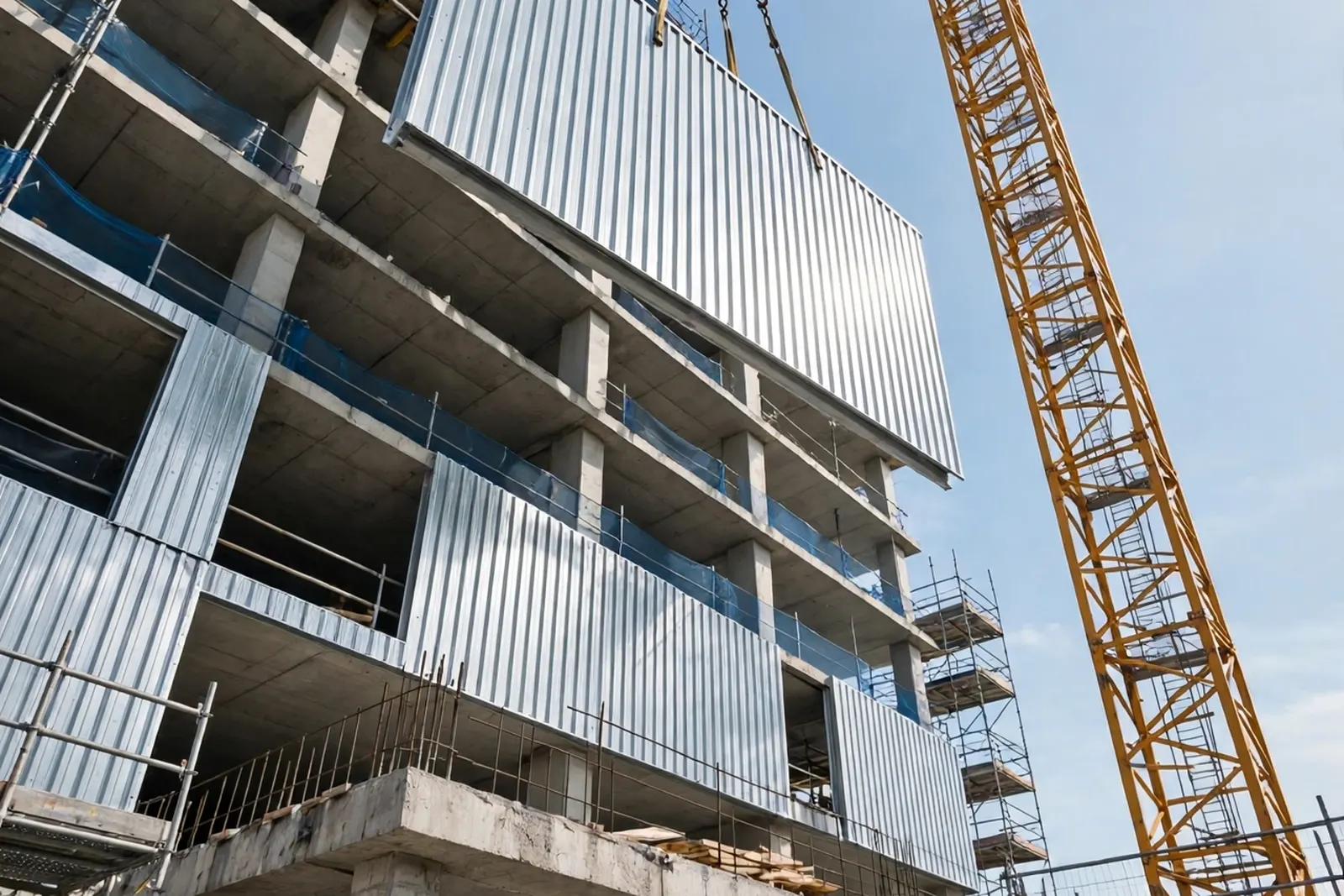
The plan-to-panel workflow exists to move that fight off your site. Your architectural plans become a fabrication model — a digital version of the frame you review before anything is made. Steel is then roll-formed from that model in a factory, and panels arrive assembled as labeled kits, with openings, blocking, and headers already in place. The difficult work — the measuring, the cutting, the fitting — is done as much as possible before the material reaches your project, because the job site is already complicated enough. The panel that comes off the truck is the panel the model called for, and the next one matches it. Consistency stops being something your crew has to manufacture out of raw material, and becomes something the factory owes them.
What your crew gets back
Quality material does not merely look better. It makes everybody downstream more effective. When panels arrive consistent and sequenced, a crew can spend its day assembling — standing walls, moving through a planned order of work — instead of sorting and culling. That can change the texture of the whole framing stage: fewer surprises to absorb, a cleaner site, and a straighter conversation about what happens next. And the finished result carries it. Nobody walks into a completed building and says, "I bet the framing was consistent." Of course not. But they notice when joints fit. They notice when walls run straight. They notice when a building still feels intentional years later. The boring process — moisture is not our problem, but modeling, machining, and fit are — creates the result people actually see.
The honest catch
None of this means every project should be framed in steel, and we will not pretend otherwise. A manufactured system earns its place project by project, on real plans, with real scope. That is why nothing here starts with a pitch. It starts with a project-fit review: your plans, measured and modeled, with the framing scope laid out so you can see what the steel path would actually involve on your building. If the review says your project is better served another way, that is the answer the review should give — and you will have lost nothing but a conversation. If it says the frame you don't have to fight is the right call, you will know exactly why.
If precision, consistency, and a crew that spends its day building instead of fixing matter to you, we should probably talk.